What Is End To End Testing In Software Testing
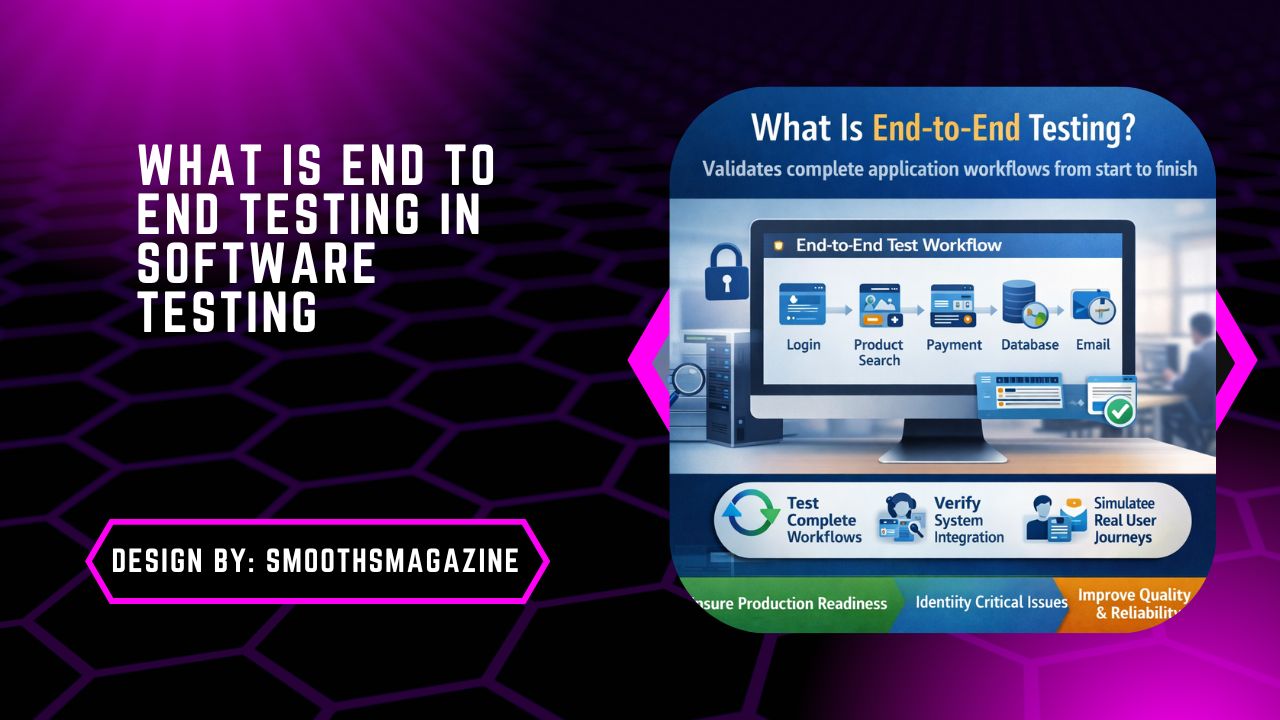
End-to-end testing is a software testing method that validates complete application workflows, ensuring all integrated components work together correctly under real-world user scenarios from start to finish.
End-to-end testing, often abbreviated as E2E testing, is a software testing methodology used to validate that an entire application works correctly from start to finish. Instead of testing individual components in isolation, end-to-end testing focuses on full workflow testing, ensuring that all integrated components function together as expected in real-world scenarios.
From a user’s perspective, end-to-end testing simulates real application flows such as logging in, placing an order, processing a payment, and receiving confirmation to verify the working order of the complete system. This approach helps quality assurance teams identify issues that may not appear during unit or integration testing.
In modern software development, where applications rely on multiple services, APIs, databases, and third-party systems, end-to-end testing plays a critical role in complete system validation.
Why End-to-End Testing Is Important in Software Testing?
The primary goal of end-to-end testing is to ensure production readiness by validating how the software behaves under real user conditions. While unit tests confirm that individual pieces work correctly, they cannot guarantee that the entire workflow will function smoothly when everything is connected.
Key Reasons E2E Testing Is Essential
- It validates data integrity across systems
- It ensures front-end and back-end systems communicate properly
- It identifies defects caused by system integration
- It simulates real-world user scenarios
- It reduces the risk of critical failures in production
Without end-to-end testing, teams may release software that passes internal checks but fails when users interact with it in real environments.
How End-to-End Testing Works?
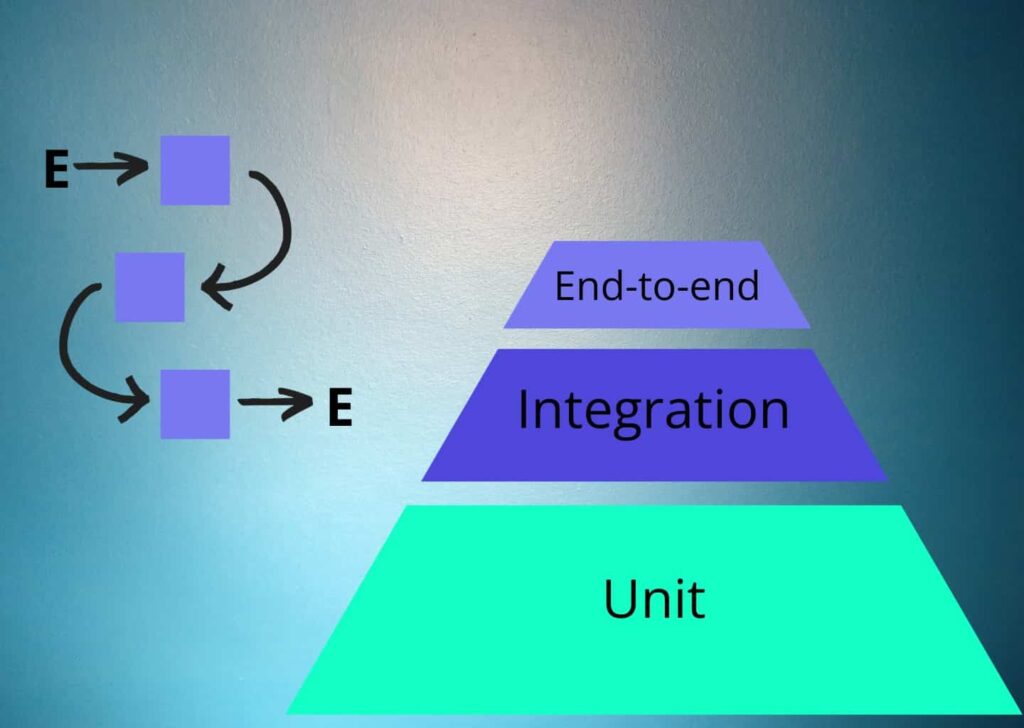
End-to-end testing evaluates the entire application lifecycle, including all dependencies, workflows, and external systems. It follows the same path a real user would take when interacting with the software.
Typical End-to-End Testing Workflow
- Understand the system architecture: Identify all integrated components, including UI, APIs, databases, and third-party services.
- Define critical user workflows: Focus on the most important business use cases, such as checkout, registration, or data submission.
- Prepare the test environment: Set up a test environment that closely mirrors production conditions.
- Execute end-to-end tests: Run tests manually or using automated testing tools.
- Validate results and data flow: Ensure the correct data is transferred and processed across systems.
- Analyze failures and resolve defects: Debug failures and perform defect resolution before release.
This process helps ensure complete system validation and reliable software performance.
Types of End-to-End Testing
Understanding different types of end-to-end testing helps teams select the right strategy based on system complexity.
1. Horizontal End-to-End Testing
Horizontal E2E testing validates workflows across multiple applications or systems from a user perspective. It focuses on end-to-end business processes rather than internal architecture.
Example: Testing an e-commerce order flow from product selection to payment and order confirmation across multiple services.
2. Vertical End-to-End Testing
Vertical E2E testing validates the system layer by layer, from the user interface down to the database.
Example: Testing a login feature that involves UI input, API authentication, database validation, and session creation.
Horizontal vs Vertical E2E Testing
| Feature | Horizontal E2E Testing | Vertical E2E Testing |
| Focus | Business workflows | System layers |
| Scope | Broad | Deep |
| Use Case | User experience validation | Data flow tracking |
| Complexity | Medium | High |
Both approaches are often combined for comprehensive coverage.
End-to-End Testing in the Software Development Lifecycle (SDLC)
End-to-end testing fits naturally into the software development lifecycle, especially in Agile and DevOps environments.
Where E2E Testing Fits
- After integration testing
- Before production release
- Within CI/CD pipelines
- During regression testing cycles
In continuous integration environments, automated E2E tests help teams detect issues early by validating full workflows with every new build.
End-to-End Testing vs Other Testing Types
Understanding how E2E testing differs from other testing methods is essential for building an effective test strategy.
E2E Testing vs Unit Testing
| Aspect | Unit Testing | End-to-End Testing |
| Scope | Individual components | Entire system |
| Speed | Very fast | Slower |
| Complexity | Low | High |
| User Perspective | No | Yes |
E2E Testing vs Integration Testing
| Aspect | Integration Testing | End-to-End Testing |
| Focus | Module interaction | Complete workflows |
| Environment | Partial system | Full system |
| Coverage | Limited | Comprehensive |
E2E testing complements these methods rather than replacing them.
Benefits of End-to-End Testing
End-to-end testing offers several key advantages for quality assurance teams and development organizations.
Major Benefits
- Improved test coverage across real application flows
- Early detection of integration issues
- Better user experience validation
- Reduced production defects
- Increased confidence in releases
By validating the system from the user’s perspective, E2E testing ensures the software behaves as expected in real-world usage.
Challenges of End-to-End Testing
Despite its benefits, end-to-end testing also comes with challenges that teams must manage carefully.
Common Challenges
- High test setup complexity
- Longer execution times
- Flaky tests due to environment instability
- Difficult debugging failures
- Maintenance overhead for automated tests
To overcome these challenges, teams should prioritize critical workflows, stabilize test environments, and follow best practices.
Best Practices for Effective End-to-End Testing
Following proven best practices can significantly improve the reliability and effectiveness of E2E testing.
Recommended Best Practices
- Focus on critical use cases, not every scenario
- Use automation tools wisely
- Maintain stable test data
- Run E2E tests within CI/CD pipelines
- Monitor test execution metrics
- Regularly review and refactor test scripts
By balancing automation and manual validation, teams can achieve better results with fewer flaky tests.
Automated End-to-End Testing
Automated E2E testing uses specialized tools to execute tests without human intervention. It is especially useful for regression testing and continuous integration.
When to Automate E2E Tests
- Repetitive workflows
- Business-critical paths
- Regression testing
- CI/CD pipeline validation
Automation helps improve reliability of automated tests when implemented correctly.
End-to-End Testing Tools
There are many tools available to support E2E testing, each designed for different use cases.
Popular End-to-End Testing Tools
- Selenium
- Cypress
- Playwright
- Katalon Studio
- TestCafe
These tools help simulate real application flows and support complex test orchestration across systems.
Real-World Example of End-to-End Testing
Consider an online banking application:
- User logs in
- Account data is retrieved
- Funds are transferred
- Transaction is recorded
- Confirmation message is displayed
End-to-end testing verifies that every step works correctly and that data flows accurately between systems.
End-to-End Testing Metrics That Matter
Tracking the right metrics helps evaluate E2E testing effectiveness.
Important Metrics
- Test pass/fail rate
- Defect identification rate
- Test execution time
- Coverage of critical workflows
- CI/CD pipeline stability
These metrics support continuous improvement and better decision-making.
The Future of End-to-End Testing
As applications become more complex, end-to-end testing will continue to evolve. AI-driven testing, self-healing test scripts, and smarter automation will reduce maintenance overhead and improve accuracy. Organizations that invest in modern E2E testing strategies will deliver more reliable, scalable, and user-friendly software.
FAQs:
1. What is the main goal of end-to-end testing?
The main goal of end-to-end testing is to verify that an application functions correctly as a whole. It ensures smooth data flow, proper system integration, and reliable performance across all connected components in real user scenarios.
2. How is end-to-end testing different from unit testing?
Unit testing focuses on individual components in isolation, while end-to-end testing validates the entire application workflow. E2E testing checks real user journeys, system interactions, and data consistency across multiple services and environments.
3. When should end-to-end testing be performed?
End-to-end testing should be performed after integration testing and before production release. It is also commonly executed during regression cycles and within CI/CD pipelines to ensure ongoing application stability.
4. What are common challenges in end-to-end testing?
Common challenges include complex test setup, longer execution times, flaky tests due to unstable environments, difficult debugging, and higher maintenance costs for automated tests in large, integrated systems.
5. Can end-to-end testing be automated?
Yes, end-to-end testing can be automated using tools like Selenium, Cypress, or Playwright. Automation is ideal for repetitive and business-critical workflows, helping teams improve efficiency, reliability, and regression coverage.
Conclusion
End-to-end testing is a vital software testing methodology that ensures applications perform reliably in real-world conditions. By validating complete workflows, system integrations, and data integrity, E2E testing helps teams identify critical issues before production. When combined with automation, CI/CD pipelines, and best practices, end-to-end testing improves software quality, reduces failures, and builds confidence in application releases.