
How to Value a Software Company – Complete Guide!
Valuing a software company depends on ARR, growth rate, churn, and profitability. Common methods include revenue multiples, EBITDA, DCF, and market comparables, focusing on scalability and recurring revenue potential.
Valuing a software business is very different from valuing traditional companies. If you’re wondering how to value a software company, the answer depends on revenue model, growth rate, profitability, and key SaaS metrics.
In today’s digital economy, software company valuation especially for SaaS (Software as a Service) businesses relies heavily on recurring revenue, scalability, and future growth potential rather than just current profits.
This complete guide explains software company valuation methods, key metrics like ARR, MRR, CAC, and LTV, and step-by-step techniques used by venture capital firms, private equity, and startup investors.
What Is Software Company Valuation?
Software company valuation is the process of determining the financial worth of a software business based on its revenue, growth, profitability, and market position.
Unlike traditional companies, most tech company valuation models focus on:
- Recurring revenue (ARR/MRR)
- Growth rate
- Customer retention (churn rate)
- Profitability metrics
- Market comparables
In simple terms, valuation answers:
👉 How much is your software business worth today and what could it be worth in the future?
Why SaaS Companies Have High Valuations?
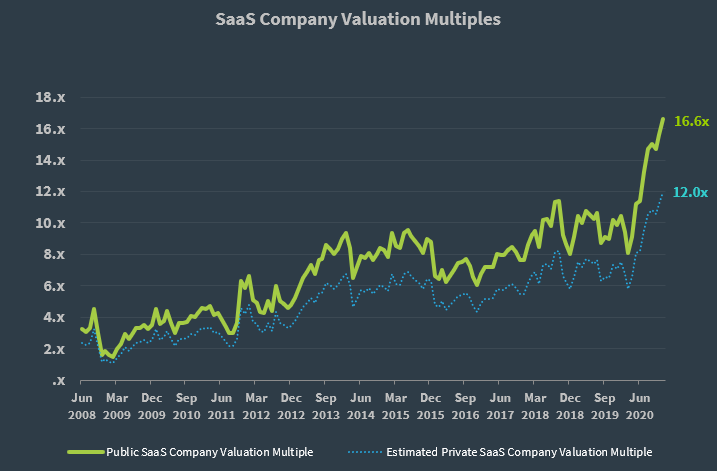
Many people ask: why do SaaS companies have high valuations?
The answer lies in their business model:
1. Recurring Revenue (ARR & MRR)
ARR (Annual Recurring Revenue) and MRR (Monthly Recurring Revenue) provide predictable income.
2. Scalability
Software can scale without significant increases in cost.
3. High Gross Margins
Most SaaS companies enjoy 70–90% gross margin.
4. Long-Term Customer Value
Strong customer lifetime value (LTV) increases valuation.
5. Investor Demand
High demand from venture capital and private equity boosts valuation multiples.
Key Metrics Used in Software Company Valuation
To understand how to calculate software business value, you must know the core valuation metrics.
1. ARR (Annual Recurring Revenue)
ARR is the most important metric in SaaS valuation methods.
Formula:
ARR = Monthly Revenue × 12
It shows predictable yearly income.
2. MRR (Monthly Recurring Revenue)
MRR gives a short-term view of revenue.
Used for:
- Growth tracking
- Forecasting
- MRR valuation methods
3. EBITDA (Profitability Metric)
EBITDA (Earnings Before Interest, Taxes, Depreciation, and Amortization) measures profitability.
Important for:
- Mature software companies
- EBITDA software valuation
4. Customer Acquisition Cost (CAC)
CAC measures how much it costs to acquire a customer.
Lower CAC = higher valuation.
5. Customer Lifetime Value (LTV)
LTV shows total revenue from a customer over time.
LTV vs CAC ratio is critical:
- Ideal ratio: 3:1 or higher
6. Churn Rate
Churn rate shows how many customers leave.
- High churn = lower valuation
- Low churn = strong retention
7. Growth Rate
Growth rate valuation is key.
Investors prioritize:
- 50%+ growth (high valuation)
- 20–40% growth (moderate valuation)
Top Software Company Valuation Methods
There are multiple software company valuation methods used in the industry.
1. Revenue Multiple Method (Most Common)
This is the most widely used method in SaaS startup valuation.
Formula:
Valuation = ARR × Revenue Multiple
Example:
- ARR = $1M
- Multiple = 8x
👉 Valuation = $8M
SaaS Revenue Multiples (2026):
| Growth Rate | Multiple |
| High (50%+) | 8x – 15x |
| Medium (20–40%) | 4x – 8x |
| Low (<20%) | 2x – 4x |
2. EBITDA Multiple Method
Used for profitable companies.
Formula:
Valuation = EBITDA × Multiple
Common in:
- Enterprise software valuation
- Mature businesses
3. Discounted Cash Flow (DCF) Method
DCF estimates future value based on cash flows.
Steps:
- Forecast future cash flow
- Apply discount rate
- Calculate present value
This is a core financial modeling method.
4. Market Comparables Method
Also known as market-based valuation software.
Compare your company with:
- Similar SaaS companies
- Industry benchmarks
Used by:
- Investors
- Analysts
Step-by-Step: How to Value a SaaS Company
Here’s a step-by-step SaaS valuation guide for beginners:
Step 1: Calculate ARR or MRR
Start with your recurring revenue.
Step 2: Analyze Growth Rate
Measure monthly or yearly growth.
Step 3: Evaluate Profitability
Check:
- EBITDA
- Net profit margin
- Cash flow statement
Step 4: Assess Key Metrics
Include:
- CAC
- LTV
- Churn rate
Step 5: Choose Valuation Method
Select:
- Revenue multiple
- DCF
- Market comparables
Step 6: Apply Industry Multiples
Use SaaS benchmarks.
Step 7: Adjust for Risk Factors
Consider:
- Competition
- Market trends
- Product quality
Real Example: Software Company Valuation
Let’s calculate a B2B SaaS valuation.
Company Data:
- ARR = $2M
- Growth rate = 40%
- Churn rate = 5%
- LTV/CAC = 4:1
Industry Multiple:
= 6x
Valuation:
$2M × 6 = $12M
👉 Estimated value: $12 million
How to Value a SaaS Startup With No Profit
Many startups ask:
👉 How to value a SaaS startup with no profit?
Investors focus on:
- ARR growth
- User acquisition
- Product-market fit
- Market size
Instead of EBITDA, they use:
- ✔ Revenue multiples
- ✔ Future projections
- ✔ Market potential
Factors Affecting Software Company Valuation
Several factors impact software business worth:
- Revenue Growth: Faster growth = higher valuation
- Churn Rate: Lower churn improves valuation
- Market Size: Larger markets attract investors
- Product Quality: Strong product = higher retention
- Competitive Advantage: Unique features increase value
- Team Strength: Experienced founders boost trust
How to Increase Software Company Valuation?
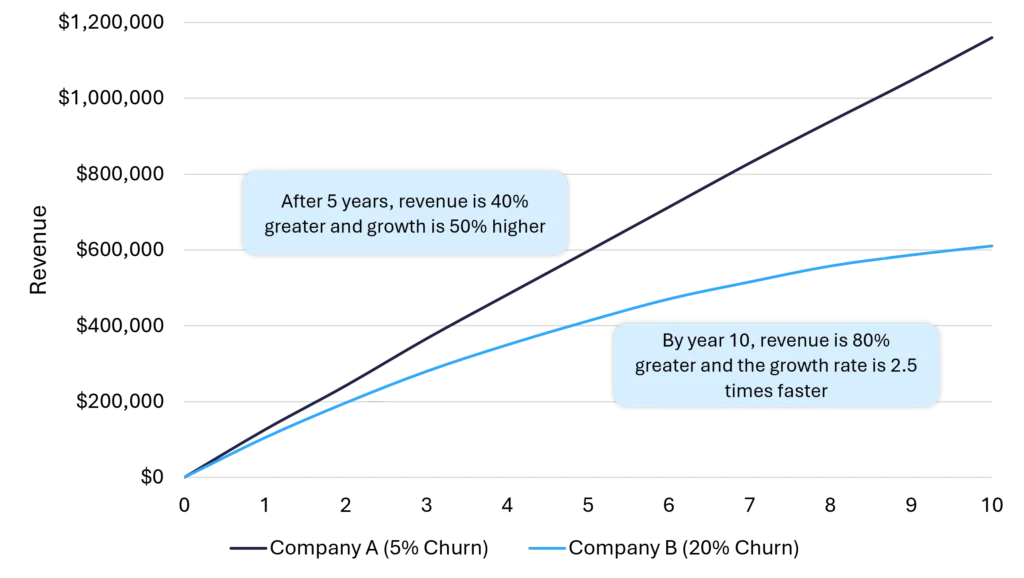
If you want to improve your valuation:
- Increase ARR: Focus on subscription growth
- Reduce Churn: Improve customer experience
- Optimize CAC: Lower acquisition costs
- Improve LTV: Increase customer retention
- Strengthen Financials: Improve margins and profitability
ARR vs MRR Valuation Metrics
Understanding ARR and MRR valuation metrics is essential.
| Metric | Use Case |
| ARR | Long-term valuation |
| MRR | Short-term growth tracking |
Both are critical in subscription-based business valuation.
SaaS vs Traditional Business Valuation
| Factor | SaaS Company | Traditional Business |
| Revenue Model | Recurring | One-time |
| Margins | High | Medium |
| Valuation Basis | Growth | Profit |
| Scalability | Very high | Limited |
Common Mistakes in Software Valuation
Avoid these mistakes:
- Ignoring churn rate
- Overestimating growth
- Using wrong valuation multiples
- Ignoring CAC vs LTV
- Not considering market comparables
Future Trends in Software Valuation (2026)
The future of cloud software company valuation includes:
- AI-driven financial modeling
- Real-time analytics
- Subscription optimization
- Increased investor competition
SaaS companies will continue to dominate due to predictable revenue models.
FAQs:
1. What is the best method to value a software company?
The best method is the revenue multiple approach, especially for SaaS companies. It uses ARR multiplied by industry benchmarks. However, EBITDA, DCF, and market comparables are also used depending on growth stage and profitability.
2. How does ARR affect software company valuation?
ARR plays a critical role because it represents predictable recurring revenue. Higher ARR with strong growth increases valuation significantly, as investors prefer stable income streams and scalable business models in SaaS companies.
3. Can a software startup without profit be valued?
Yes, startups without profit can still be valued using revenue multiples, growth rate, and market potential. Investors focus on user growth, product-market fit, and future earnings rather than current profitability.
4. Why is churn rate important in valuation?
Churn rate shows how many customers leave the service. A high churn rate lowers customer lifetime value and reduces valuation, while low churn indicates strong retention and improves investor confidence.
5. What is a good LTV to CAC ratio for SaaS companies?
A good LTV to CAC ratio is 3:1 or higher. It means customer lifetime value is three times the acquisition cost, indicating efficient growth, strong profitability, and a healthy SaaS business model.
Conclusion
Valuing a software company requires understanding key metrics like ARR, growth rate, churn, and customer value. Modern valuation methods focus on scalability and recurring revenue rather than just profits. By using approaches such as revenue multiples, DCF, and market comparables, businesses can estimate their true worth. Companies that maintain strong growth, low churn, and efficient customer acquisition achieve higher valuations. In today’s SaaS-driven market, focusing on long-term performance and financial health is essential for maximizing business value.



2 Comments